“Celebrating Clinical Research”
Claire Pomeroy, MD, MBA
Clinical Research Forum May 11, 2026
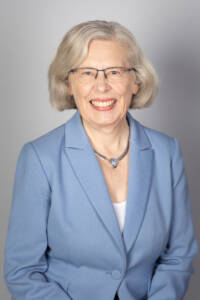
Tonight is a celebration – really a love letter to clinical medical research. I am honored to be with you as together we recognize that clinical research motivates, inspires and helps heal us all.
We have the privilege of learning about this year’s top 10 clinical research advances. Given my role as president of the Lasker Foundation, I want to share with you in turn, some thoughts about how we honor this field.
But as we hear the stories of the paths that tonight’s honorees have pursued, I thought I would start by briefly sharing with you a bit about my clinical research journey. It demonstrates two big points -- first, this research frequently emanates from wanting to find better answers for the patients we care for and second, the adventures are often full of unexpected pivots.
After completing my training in internal medicine, motivated by the death of a young woman with anorexia in the medical ICU, I partnered with colleagues in psychiatry to research new therapies for eating disorders. After observing that patients were less likely to manifest symptoms of minor infections, we documented that they had blunted immune responses including lower levels of complement and cytokines including IL-6—mediators of such symptoms.
Intrigued by these observations, I elected to learn more about immunology by pursuing an infectious disease fellowship, just, it turns out, as the HIV epidemic devastated a whole new group of patients. And with this pivot, I studied infections that my patients were getting—such as CMV and toxoplasmosis—in mouse models, and participated in ACTG trials of new antiretrovirals. I was playing my part in helping science create hope and save lives.
Since joining the Lasker Foundation 13 years ago, I have had the exciting pleasure of celebrating many of the world’s greatest clinical researchers. The array of inspiring researchers honored by Lasker is truly amazing—from Bernard Fisher, the surgeon who transformed breast cancer care by showing the efficacy of lumpectomy to Al Sommer, and ophthalmologist and epidemiologist who demonstrated the ability of pennies worth of Vit A to not only cure night blindness but also to dramatically reduce child deaths, to John Glen, a veterinarian turned drug developer who created propofol, which we will appreciate when undergoing medical procedures. The diversity of backgrounds of clinical researchers is one of the reasons new ideas flourish!
An important trend that the Lasker Awards reflect is the increasing recognition of the power of teams to do research—often with members ranging from basic scientists to those working in industry. Consider the discovery of hepatitis C drugs which recognized that Rice and Bartenschlager’s creation of the replicon C system was the foundation for the drugs developed by Sofia and colleagues. And that the discovery of the CFTR receptor by Welsh was the breakthrough that later allowed Gonzalez and Negulescu to develop the drugs at Vertex that transformed the lives of most patients with cystic fibrosis.
Similarly, Habener and Mojsov unlocked the significance of the basic biology of GLP-1 that opened the way to the breakthrough drugs created by Knudsen and her colleagues at NovoNordisk to combat the obesity epidemic.
And it is important to remember that teams can cross disciplines—such as the partnership between bioengineers Fujimoto and Swanson and ophthalmologist David Huang to create the optical coherence tomography (OCT) machines that are now used every day to detect and monitor retinal diseases.
Another key issue highlighted by the Lasker Awards is that a critical part of successful clinical research is ensuring that the benefits of the research reach all those who can benefit. Thus, clinical research at Lasker has sometimes been recognized with the Public Service Award -- such as the Lasker given to Maurice Hilleman who developed MMR and other vaccines, now estimated to have saved more than 94 million lives since 1974.
And one of my favorite Laureates, Harold Freeman, a surgeon whose observation that his breast cancer patients in Harlem were coming for care too late prompted him to develop patient navigator systems to address social determinants of health.
These are just a few examples of the clinical research successes that inspire us to devote our lives to finding new answers, new hope—and I thank you for your commitment to these endeavors.
Yet despite these accomplishments and the promise of future opportunities, it is equally important to recognize that we are at a moment of great peril for clinical research in our country today. From cuts to federal research funding, the advent of review of grants by political appointees, anti-DEI and other policy changes, restriction of research topics such as mRNA vaccines, and the disconnect between Congressional appropriations and the actual release of research dollars by OMB, not to mention threats of additional actions such as decreases in indirect cost recovery and taxes on university and philanthropic endowments. We are indeed in a moment of existential crisis.
Despite the advocacy win in FY26, which saw a slight increase in the NIH budget, the reality of “slow walking” and “forward funding” mean that the number of NIH grants was significantly lower this year, with a particularly distressing drop in new grants.
And as we begin work to advocate for FY27, the President’s proposed budget again threatens significant cuts to NIH, and devastating reductions at CDC, AHRQ and NSF. While we presume that Congress will again push back, less visible actions like proposals for 100% forward funding, present great concern. Especially, as we realize that China has now officially surpassed the US in R&D funding – and now rivals us in number of patents issued.
Many of us now talk about “Science Before and After the Rupture”. Whether cause or symptom, the declining percentage of Americans who say that science has had a mostly positive effect on society has not recovered from the drops that occurred during Covid.
We cannot merely advocate for a return to the previous status quo, I am convinced that we most look for the tough messages reflected by the current lack of public trust in science, and commit to the call to “Build Back Better”
What has driven this rupture between science and the public?
To start with, we must recognize what the public sees. The US is clearly still the global leader in research—scientists and entrepreneurs are still drawn (despite many new barriers) to the opportunity of America. But the public sees that that leadership doesn’t translate to better experiences in their own healthcare. We rank at the bottom of OECD countries for health care system performance, yet spend far more than others. The public sees problems with access and affordability—and doesn’t trust that medical research will benefit them.
Indeed, life expectancy in the US lags other developed countries; shameful health disparities on the basis of race, gender, geography, immigration status, and more characterize outcomes; and all this comes at a time of rising healthcare costs in an era where affordability is top of mind.
Despite our research breakthroughs, the social determinants of health remain inadequately addressed in our country, such that income correlates continuously and dramatically with life expectancy; and the adage that “your zip code is a more powerful driver of health status than your genetic code” remains unassailable.
I believe that clinical research is the lynch pin of the response to these challenges. We can do research that advances personalized medicine and even predicts individual’s future development of disease. New diagnostics can allow better and less expensive identification of illness. New therapies are being developed that treat conditions which previously defied effective interventions. And breakthroughs like base editing can provide astonishing vitality to people like Baby KJ.
New technologies like wearables empower patients. Big data can identify solutions on a scale never before possible. AI means that we can combine technologic power with human power to find new solutions. And implementation research can identify systems changes and healthcare delivery improvements that will allow everyone a better chance for a healthy future.
But this will not come automatically. If we are to “Build Back Better”, we must embrace our individual and collective responsibility to be part of the solution. Communication is essential. Americans perceive researchers to be intelligent but not to be good communicators—we need to change that.
Part of effectively communicating our message is making the economic case. It is a good one—we know that every dollar in NIH awards generates 2 to 3 dollars in ROI. Innovation is central to our national economy—we should convey that every American benefits when we “ensure that our biomedical innovation ecosystem, which has a strong and well-funded NIH at its center, remains the envy of the world”.
Another key part of effective communication about medical research is making it personal. Celebrating the Lasker for cochlear implants was made especially moving when a young patient with a cochlear implant joined our Luncheon celebration. The breakthrough of checkpoint inhibitors was even more powerfully communicated when Jim Allison shared his family’s experience with cancer. And when accepting their Lasker, the Abdool Karims described young women who were able to stay in school because of effective HIV prevention, I thought of the patients I had cared for early in the epidemic and realized how much more hope there was because of clinical medical research.
And then, 10 years ago, it became immediately personal for me. Diagnosed with renal cell cancer, I knew that the ultrasound that had found my tumor, the CT scan that defined its size, and the MRI that ruled out pancreatic involvement were why I had a future. And disease-free today, I celebrate those Laureates who made my happy ending possible.
So, let’s all be part of the solution. Let’s all be part of ensuring that the promise is realized. Be a voice for science, be a role model and mentor for the next generation, learn and use advocacy tools and initiatives, share stories, and express thanks to policymakers, funders and scientists themselves.
I express my gratitude to everyone in this room for all that you do for clinical research.
Thank you.